

Nvidia's Jensen Huang, US-China AI Chip War, and the Battle for Southeast Asia's Tech Future
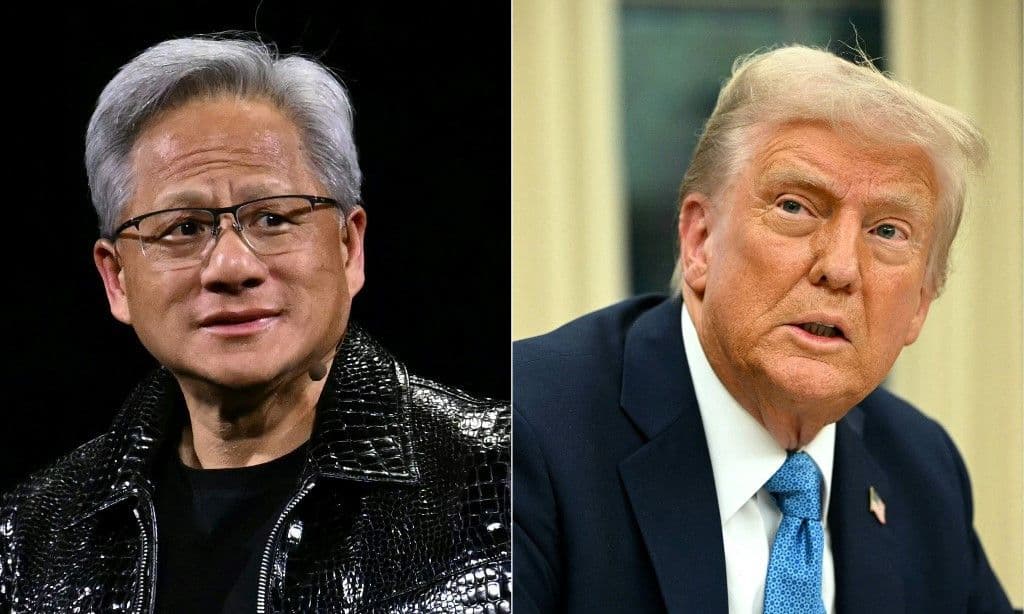
Wall Street loves a good power play, and Nvidia CEO Jensen Huang just delivered one for the ages in Beijing. His high-stakes negotiations with Chinese officials over AI chip access weren't just diplomatic theater—they could determine whether Asia's AI future is built on American chips or goes fully homegrown. For Southeast Asian investors watching this unfold, it's like seeing two heavyweight boxers size each other up before the main event, with billions in tech investment hanging in the balance.
What Happened: The World's Most Expensive Game of Diplomatic Chess
Here's the breakdown without the corporate speak: Nvidia's CEO flew to Beijing with a shopping list of concessions, hoping Chinese officials would throw him a lifeline as U.S. export controls choke off his company's biggest growth engine. Huang essentially walked into the room saying, "Help us help you"—seeking regulatory clarity, market access, and protection from the black market chip trade that's been booming since Washington tightened the screws.
The response? Beijing gave him the diplomatic equivalent of a polite nod and a firm "thanks, but we're good." Chinese officials doubled down on their "buy local" messaging, actively discouraging companies from purchasing Nvidia's H20 chips (the watered-down versions designed to comply with U.S. rules) in favor of homegrown alternatives from Huawei and Cambricon.
Think of it this way: Huang showed up asking for a partnership, but China's already swiping right on domestic alternatives. The message was clear—we're building our own AI ecosystem, and your export-controlled chips are yesterday's news.
The Deeper Dive: Why This Matters More Than Your Morning Coffee
This isn't just about one company's quarterly earnings. We're watching the formation of parallel AI universes, and the implications stretch far beyond Silicon Valley boardrooms. The numbers tell a brutal story: Nvidia reported a $4.5 billion charge on unsellable inventory and missed out on $2.5 billion in revenue from halted H20 chip sales. That's not pocket change—that's market-moving money.
China's response signals something massive: they're not just adapting to U.S. restrictions—they're using them as rocket fuel for domestic innovation. The proof is in the pudding: Cambricon, China's homegrown AI chip darling, saw its Q1 2025 revenue jump over 4,200% year-on-year. That's not growth—that's an explosion.
Meanwhile, China's planning to build roughly 40 data centers in the Xinjiang desert, powered by over 115,000 Nvidia chips that they technically can't buy. It's like announcing you're building a Ferrari collection while Ferrari's banned from selling to you. The audacity is breathtaking, but so is the determination.
For Nvidia, this represents an existential challenge. China was their second-largest market, and losing it permanently would be like Starbucks losing all its afternoon customers. The company's trying to thread an impossible needle—staying compliant with U.S. export controls while maintaining access to the world's most AI-hungry market.
Chinese chipmakers are having their iPhone moment. Just as Apple's success spawned countless smartphone competitors, U.S. export controls are creating space for Chinese alternatives to flourish. Huawei, Cambricon, and others are no longer competing just on price—they're positioning themselves as the patriotic choice, the chips that won't disappear when Washington sneezes.
Southeast Asia Impact: The Ripple Effect Hits Home
For investors across Southeast Asia, this power struggle creates both opportunities and headaches. The region sits at the intersection of these competing AI ecosystems, and choosing sides could determine which companies thrive over the next decade.
The Investment Angle: Southeast Asian tech companies now face a strategic fork in the road. Do they bet on Nvidia's established ecosystem, knowing it comes with geopolitical risk? Or do they pivot toward Chinese alternatives that might be less proven but more politically stable? Companies like Grab, Sea Limited, and GoTo are watching this closely—their AI ambitions depend on having reliable chip supplies that won't vanish overnight due to export controls.
The Supply Chain Reality: Southeast Asia's role as a manufacturing hub makes this even more complex. Malaysia and Thailand are already seeing increased scrutiny as potential transshipment points for restricted chips, with ongoing U.S. investigations into chip smuggling routes. Local companies could find themselves caught in the crossfire, facing compliance costs and regulatory uncertainty that didn't exist two years ago.
The Currency Connection: This tech cold war is also playing out in currency markets. As China doubles down on domestic alternatives, we're seeing increased yuan-denominated trade in tech components. For Southeast Asian importers, this could mean less dollar exposure—but also more complexity in managing multiple currency risks as the semiconductor supply chain fragments.
Alex's Wrap: Following the Signals in a Noisy Market
Here's the bottom line for Asian investors: We're not just watching a trade dispute—we're witnessing the birth of competing technology ecosystems that will define the next decade. Huang's Beijing meetings failed to bridge the gap, but they clarified the stakes beautifully.
The smart money isn't betting on reconciliation; it's positioning for a bifurcated world where different regions run on different tech stacks. For Southeast Asian investors, this means thinking beyond traditional U.S.-China trade flows and considering how local companies can thrive in both ecosystems.
What to watch next: Keep an eye on how major Southeast Asian tech firms announce their AI infrastructure partnerships over the coming quarters. Those choices will signal which way the wind is blowing and where the biggest opportunities—and risks—lie.
The street's mood on this one is cautiously pessimistic about near-term U.S.-China tech cooperation, but bullish on the innovation that competition breeds. Translation: buckle up for more volatility, but also more opportunities for nimble investors who can navigate the complexity.
In short: The AI gold rush is becoming an AI arms race, and Southeast Asia—with its massive tech sector and strategic location—is the prize both sides want to win. Follow the signals, but remember—in this game, the biggest winners might be the companies that figure out how to play both sides while the superpowers duke it out.
This article reflects the author's independent analysis and should not be interpreted as financial advice. Readers are encouraged to conduct their own research before making investment decisions. Market conditions are fluid—stay informed, stay skeptical, and invest wisely.