
Singapore's $9 Billion Marina Bay Sands Expansion 2025: How Asia's Largest Resort Investment Could Redefine ASEAN Tourism
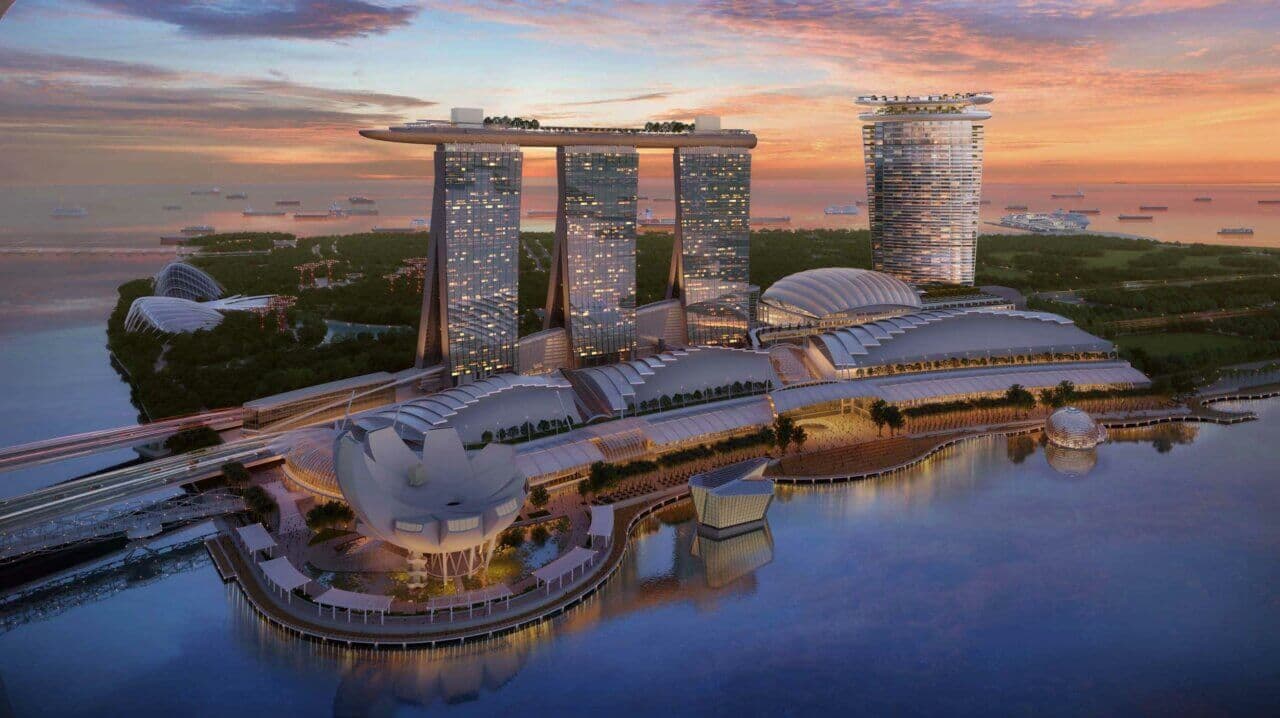
No ASEAN tourism investment has matched this scale in over a decade. Las Vegas Sands broke ground in July 2025 on its massive US$9 billion Marina Bay Sands expansion—now the largest integrated resort investment in Asia—signaling an unprecedented vote of confidence in Singapore's tourism trajectory. With the city-state achieving record-breaking tourism receipts of S$29.8 billion in 2024 (surpassing pre-pandemic levels), this mega-project represents more than infrastructure development: Singapore is positioning itself to redefine luxury entertainment tourism across Southeast Asia.
The centrepiece fourth tower, rising 55 storeys with its distinctive angled silhouette, represents more than architectural ambition. Housing just 570 ultra-luxury suites—each with private terraces and gardens—it's targeting the ultra-high-net-worth segment that drives outsized economic impact. But the real game-changer lies in the 15,000-seat entertainment arena, purpose-built to capture the massive touring acts that have historically bypassed Southeast Asia for larger markets.
This strategic positioning couldn't be more timely. ASEAN's live entertainment market has exploded post-pandemic, with concert tourism driving significant spillover effects across hospitality, retail, and F&B sectors. Taylor Swift's recent Eras Tour stops in Singapore generated an estimated S$500 million in tourism receipts, demonstrating how exclusive entertainment can magnetise regional audiences. The new arena positions Singapore to capture more of these high-value, culturally significant events that drive both immediate tourism revenue and long-term destination branding.
The expansion's scale becomes even more impressive in regional context. Singapore recorded 16.5 million international visitors in 2024—up 21% year-on-year—with sightseeing, entertainment, and gaming spend surging 25%. The existing Marina Bay Sands already hosts over 500 million cumulative visitors and maintains 95% hotel occupancy rates. The new 15,000-seat arena will dwarf Bangkok's Impact Arena (12,000 capacity) and Hong Kong's AsiaWorld-Expo (14,000), positioning Singapore as the region's undisputed mega-event destination.
The expansion's emphasis on sustainability and biophilic design also aligns with evolving traveller preferences, particularly among younger Asian consumers who increasingly factor environmental considerations into luxury purchases. The project's 76,000 square foot Skyloop rooftop, featuring 360-degree gardens and infinity pools, exemplifies how Singapore is reimagining luxury hospitality through an environmental lens—a model likely to influence resort developments across the region.
From a regulatory perspective, Singapore's approach offers fascinating insights for other ASEAN markets. The additional US$1 billion in land premiums paid to the Singapore Tourism Board demonstrates how governments can capture significant value from private sector investments while maintaining strategic control over tourism infrastructure. This model contrasts sharply with more liberalised approaches in markets like the Philippines or Cambodia, where foreign casino operators often negotiate more favourable terms.
The project's 2029 completion timeline aligns perfectly with Singapore's broader economic transformation. The adjacent Greater Southern Waterfront development will add 9,000 new homes by 2030, creating a comprehensive live-work-play ecosystem that extends far beyond tourism. Early property sentiment signals strong investor confidence—the first private residential tenders at nearby Telok Blangah have attracted premium pricing, suggesting sustained capital appreciation as the precinct matures.
For wealth accumulation enthusiasts tracking Singapore's hospitality and property sectors, the expansion signals sustained institutional confidence in the city-state's economic trajectory. The project is expected to create over 7,000 construction jobs and thousands of permanent hospitality positions, while Singapore targets S$50 billion in annual tourism receipts by 2040—with MICE expansion as a primary growth driver.
Looking ahead, if Singapore's ultra-luxury positioning succeeds, expect a wave of premium-oriented tourism investments across ASEAN, reset expectations for visitor experiences, and establish new competitive benchmarks in event hosting infrastructure. The success of this expansion will likely influence tourism investment patterns from Kuala Lumpur to Ho Chi Minh City, potentially encouraging similar luxury positioning strategies throughout the region.
Rachel Tan covers ASEAN fintech trends and cross-border opportunities for regional investors and entrepreneurs.
Disclaimer: This article is for informational purposes only and does not constitute financial or investment advice. Readers should conduct their own research and consult qualified professionals before making investment decisions.