

The US Dollar at a Crossroads: Navigating the Future of the World's Reserve Currency
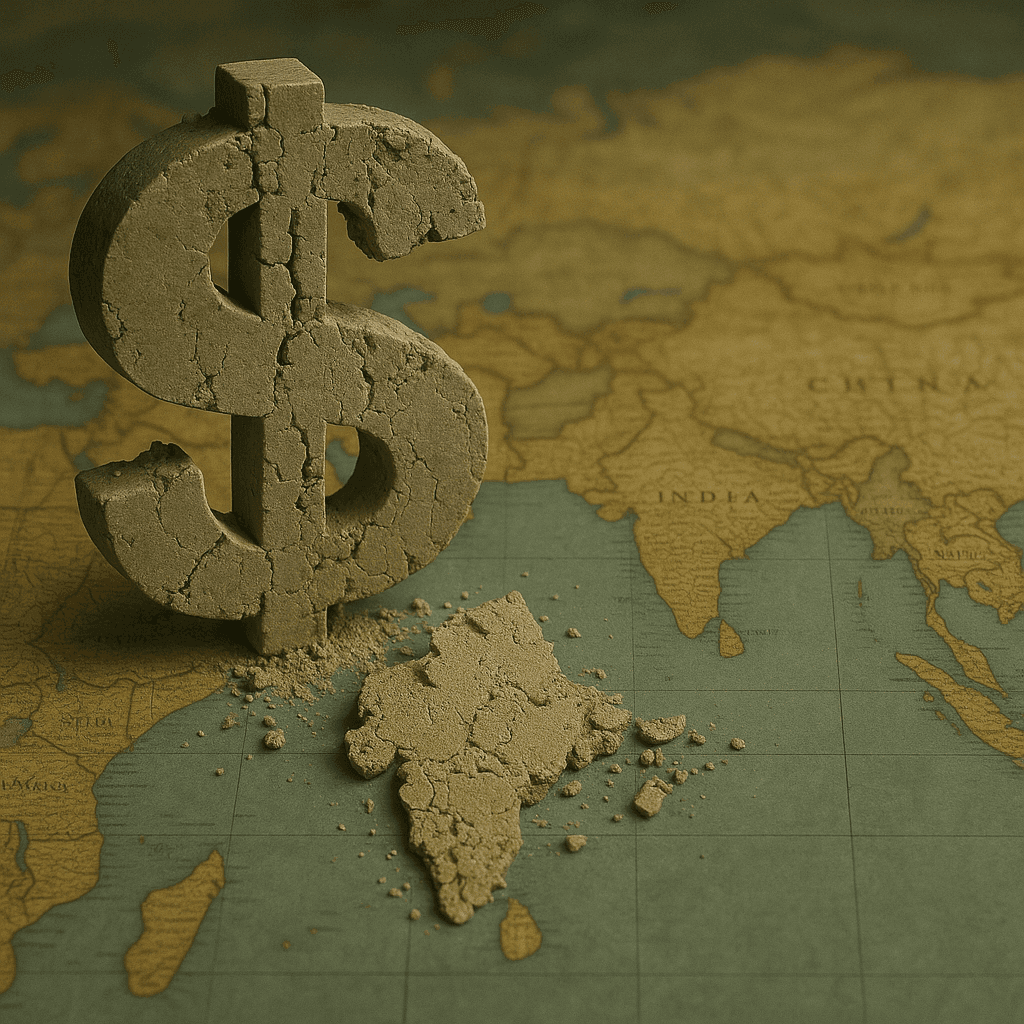
As the greenback faces its sharpest decline in over a decade, Southeast Asian investors must reassess dollar exposure in an evolving global financial landscapeThe US dollar's 8.4% year-to-date plunge through April 2025 marks more than a typical currency fluctuation—it signals a potential inflection point in the international monetary system that Southeast Asian investors cannot afford to ignore. With the Dollar Index (DXY) experiencing its steepest two-month drop (-7.6%) since 2009 and respected economists like Harvard's Kenneth Rogoff warning that "the era of U.S. dollar dominance may be winding down," we stand at a pivotal moment in global finance that carries profound implications for wealth preservation, investment strategy, and economic security across Southeast Asia.
The Dollar's Descent: Understanding Recent Volatility
The greenback's recent trajectory reads like a cautionary tale of policy missteps and structural vulnerabilities:
April's Sharp Correction
The dollar's troubles intensified in early April when the US Dollar Index tumbled amid a perfect storm of negative catalysts. The EUR/USD pair surged from 1.0811 to 1.1325, while USD/JPY plummeted from 149.69 to 142.85, reflecting broad-based dollar weakness across major currency pairs.Behind this dramatic movement lay several interrelated factors, but none more impactful than the April 2 announcement of sweeping US tariffs—a 10% blanket tariff on imports and a 25% levy on automobiles and steel. These measures triggered immediate fears of stagflation, a toxic combination of lower economic growth and higher inflation that historically punishes currency values.
May's Tentative Stabilization
By mid-May, the dollar found temporary footing, with the DXY hovering near 100.65, though still down 4.32% year-to-date. This tentative stabilization came as markets digested the Federal Reserve's decision to maintain interest rates at 4.25-4.5%, delaying expected cuts due to tariff-induced inflation concerns.For Southeast Asian currencies, this reprieve translated to a brief pause in appreciation against the dollar. The Singapore dollar, Vietnamese dong, and Thai baht all surrendered some recent gains, though they remain significantly stronger for the year.
Key Drivers of Dollar Weakness: Beyond Cyclical Factors
While currency markets always reflect multiple influences, the current dollar weakness transcends typical cyclical patterns, suggesting deeper structural shifts:
Trade Policy and Tariff ShocksThe April tariff announcements represent a seismic shift in US trade policy with far-reaching consequences. According to Yale University's Budget Lab, these measures alone are projected to reduce 2025 US GDP growth by 0.5 percentage points, with the cumulative impact of all 2025 tariffs cutting growth by nearly a full percentage point.For consumers, the tariffs translate to a 1.3% increase in price levels—costing American households approximately $2,100 annually. Particular sectors face even steeper increases, with apparel prices surging 17%.China's retaliatory 125% tariffs and similar measures from other trading partners further complicate the outlook, creating a feedback loop of economic restriction that undermines confidence in dollar-denominated assets.
Investor Confidence Erosion and Capital FlightPerhaps most alarming for dollar bulls is the unprecedented capital reallocation underway. Foreign investors reduced exposure to US assets dramatically in early 2025, with a staggering $1.6 trillion in outflows from US equities and bonds in Q1 alone."The period of US exceptionalism is ending," notes Roger J. Kerr of Interest.co.nz, pointing to capital outflows and the need for a weaker dollar to restore US manufacturing competitiveness as key structural shifts.This sentiment reverberates across Wall Street, with Goldman Sachs Chief Economist Jan Hatzius expecting continued dollar depreciation even without a US recession. He highlights that foreign demand for US assets is waning, with further dollar weakness likely needed to attract new international capital.
Federal Reserve Constraints and Fiscal ChallengesThe Federal Reserve faces an increasingly difficult balancing act. While economic slowdown typically warrants monetary easing, tariff-induced inflation (potentially adding 0.3-0.5 percentage points to US CPI) complicates rate-cut decisions.Markets currently price in 2-3 rate cuts by year-end, but uncertainty remains high. Meanwhile, the $34 trillion US debt burden—and growing fiscal deficits—casts a long shadow over long-term dollar prospects, fueling what some analysts describe as a "crisis of confidence."
Implications for Southeast Asian Economies and Investors
The dollar's trajectory carries particular significance for Southeast Asian economies, which have historically maintained close ties to the US financial system:
Just one step to unlock the rest of this article
Sign in to read the full article and access exclusive content
✨ Completely free • No credit card required