
When $111 SGD Buys You a Lesson in Economic Intimacy in Singapore: Cilantro's Biryani Club and the Real Cost of Shared Abundance
How a little piece of India found its way to Joo Chiat Road, complete with three magnificent aluminum cauldrons that transported me back to Delhi street corners and the kind of memories money can't replicate
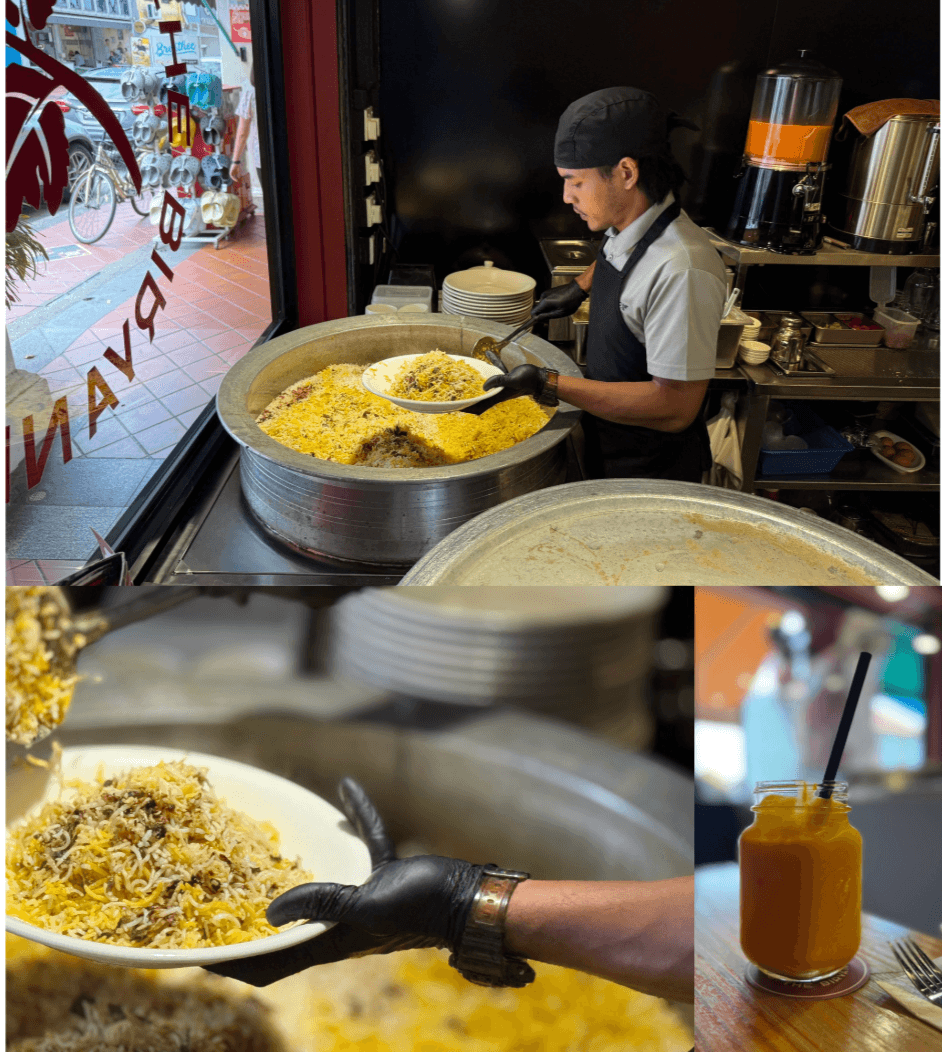
The three massive aluminum cauldrons at Cilantro's entrance hit me like a sensory arbitrage opportunity—gleaming vessels the size of restaurant sinks, steam rising like incense from what could have been lifted straight from any Delhi street corner. Học để biết, biết để làm, my mother always said—learn to know, know to act—but sometimes the knowledge you accumulate becomes the foundation for understanding why a $111 dinner in Singapore feels like compound interest on delayed gratification, all served from a trinity of aluminum cauldrons that hold court like shrines at a temple dedicated to subcontinental abundance.
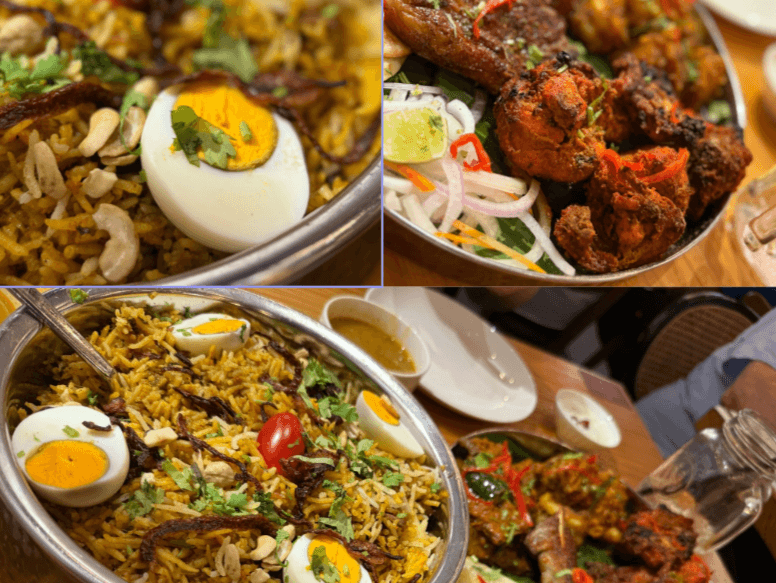
My friend and I had come for their premium platter, and watching that dramatic display of rice preparation from those three theatrical vessels, I calculated the cultural distance we were about to traverse. As our feast arrived—a kaleidoscope of Indian colors spanning masala lamb racks, biryani wagyu beef brisket, pepper prawns, and chicken tikka tandoori—I realized we weren't just paying for food. We were buying passage back to a place where I once knew the exact exchange rate between hunger and satisfaction.
By the time we factored in drinks and Singapore's inevitable tax mathematics, our bill reached $111 SGD. But what we'd really purchased was something my trader's brain couldn't quantify: the exact moisture content of rice that transports you across continents with every forkful. And here's the kicker—$111 SGD for what we consumed was amazing value, the kind of pricing that makes you question everything you thought you know about restaurant economics.
The Economics of Three Perfect Vessels (And Why My Palate Remembers Everything)
Those three aluminum cauldrons at Cilantro's entrance aren't just cooking equipment—they're a portal to every great meal I remember from Delhi's Chandni Chowk, where similar vessels worked their magic over open flames. The rice, moist and succulent from those dramatic aluminum cauldrons positioned like shrines at the restaurant's entrance, came studded with cashews and almonds, crowned with perfectly halved eggs that added both protein and visual punctuation to an already abundant spread. Each grain glistened with saffron and spice oils, creating a foundation that transported me back to those late-night discoveries in Karol Bagh when every bite felt like cultural education.
This is cultural arbitrage at its most personal—Cilantro operates on what I call the "triple vessel spectacle model," where those three aluminum cauldrons do all the heavy lifting, both culinary and theatrical. They demonstrate freshness, create anticipation, and most importantly, justify premium pricing through visible technique that any Delhi street corner veteran would recognize as legitimate.
The $111 Reality Check: When Amazing Value Meets Market Logic
The amazing value proposition becomes clear when you break down the protein economics: masala lamb racks that would cost $35 solo at any decent steakhouse, wagyu beef brisket worth $30 minimum, pepper prawns commanding $25 in Singapore's seafood market, plus chicken tikka that's perfectly executed rather than an afterthought. Add the theatrical rice preparation from those three commanding cauldrons and cultural education, and $111 SGD starts feeling like the kind of pricing that benefits early adopters who understand market inefficiencies.
Those masala lamb racks, tender enough to fall off the bone, paired with wagyu beef brisket that showcased subcontinental spice technique on premium protein—the kind of upgrade that reminded me of those moments in Delhi coffee shops when you'd catch glimpses of what abundance could look like. The pepper prawns provided seafood appeal that my Singapore-adapted palate now expects, while the chicken tikka offered familiar tandoori comfort that transported me back to those wonderful late-night food adventures when the exchange rate was favorable and every meal felt like discovery.
The Economics of Shared Abundance: Why Splitting Platters Makes Financial and Emotional Sense
Here's what my grandmother, cháu ơi, understood about money that most Marina District diners miss: the best meals aren't optimized for individual consumption—they're designed for division. Sharing that premium platter with my friend wasn't just about halving the cost; it was about doubling the cultural experience. When you split a $111 feast, you're not just practicing cost arbitrage—you're participating in something that Vietnamese families call "happiness multiplication," where the joy of discovery gets amplified through witness and commentary.
From my trading days, I learned that the most profitable deals often required partnership, someone to share both risk and reward. The same principle applies to dining: that wagyu beef brisket tastes better when there's someone across the table to appreciate its perfect spice absorption, someone who understands why you're getting that look of recognition when the rice hits your palate just right. The economic inefficiency of individual dining—paying full price for half the conversation—becomes obvious when you experience the compound returns of shared abundance.
Cultural Arbitrage in Every Memory-Laden Bite
What struck me most was how the entire experience—from those three steaming aluminum cauldrons at the entrance to the kaleidoscope of colors on our platter—creates sensory value multiplication that compounds when filtered through personal history and shared appreciation. That moist, nut-studded rice served as both foundation and time machine. Every grain carried the moisture content I remembered from Delhi's best hotel restaurants but the emotional accessibility I'd found in street-corner stalls, where similar aluminum cauldrons promised the same theatrical abundance.
From my Marina District apartment where I write about urban economic dysfunction, I recognize Cilantro as something increasingly rare: a restaurant that understands the economics of respectful cultural preservation priced for middle-class celebration, where the apparent inefficiency of premium pricing actually serves the higher efficiency of cultural continuity—and does so at price points that feel like discovery rather than exploitation.
As my friend and I finished our shared feast, dividing the last pieces of wagyu beef brisket and scraping up the final grains of that succulent, nut-studded rice, I realized we'd participated in something my trader's brain finally couldn't quantify: a meal where $111 bought not just food but the resolution of hunger for abundance, all blessed by those three aluminum cauldrons standing like shrines at a temple of cultural authenticity.
This is what happens when cultural arbitrage becomes personal: you start to understand that amazing value isn't about cheap prices—it's about fair ones that let you close the gap between memory and reality, one perfectly moist grain at a time, shared with someone who appreciates both the journey and the destination.
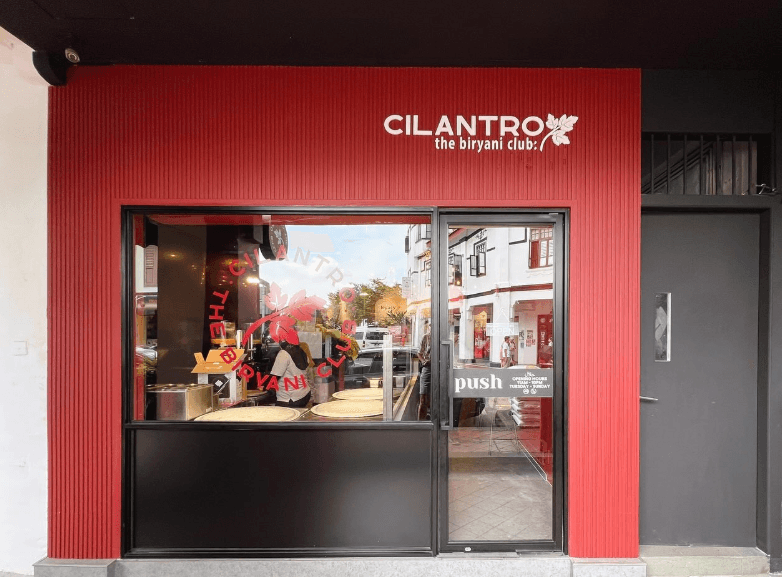
Cilantro: The Biryani Club
Address: 102 Joo Chiat Rd, Singapore 427396
Phone: 8317 3261
Website: https://linktr.ee/cilantro.sg
Hours: Tuesday-Sunday 11am-10pm (Closed Mondays)
Service: Serves vegetarian dishes alongside their premium meat selections
Robin Wong writes "The Real Cost" every Wednesday from his rent-controlled apartment in San Francisco, where he tracks the economics of living between cultures and the precise exchange rate between memory and money.